Human-Centric AI: Understanding Technology’s Impact on Society

A graphic representing the intersection of human intelligence and artificial intelligence, featuring a brain on one side and a circuit board design on the other, symbolizing the fusion of cognitive functions and technology.

As a digital anthropologist, studying all digital technology from a human-centric approach allows me to focus on how the technology impacts the humans who use it and human culture more broadly. As I was recently preparing for an invited lecture on AI & Society, I realized that the existing schemes for categorizing AI focused on categorizing the technology, its level of intelligence, and the underlying learning (machine learning, deep learning, nerual networks) and data-gathering mechanisms (sensors, computer vision, etc). But as an anthropologist, I think it’s also important for us to have a human-centered approach to categorizing AI based on how people interact with AI-powered technologies.

These terms aren’t entirely new by any means; we used the term diagnostic AI ” to describe the AI-powered remote heart monitor from my product management days at Preventice Solutions | Boston Scientific and conversational AI to describe the patient engagement chatbot I worked on there. But in the wake of the hype around Gen AI, I’m pulling together a list of human-centered categories to illuminate the current AI landscape and make it more accessible for people who interact with AI on a regular basis, often without realizing. My goal here is to give a common vocabulary without the more technical jargon for people curious about AI and emerging technology.

An illustration of a brain with labeled sections for different types of AI including Conversational AI, Predictive AI, Automation AI, Perception AI, Decision-making AI, Generative AI, Diagnostic AI, and Surveillance AI.

1. Conversational AI:

  • Description: AI systems designed to simulate human-like conversation. They understand and respond to natural language, enabling interactions through voice or text.
  • Examples:
    • Virtual Assistants: Siri, Alexa, Google Assistant, Cortana. Used for answering questions, setting reminders, playing music, controlling smart home devices, and more.
    • Chatbots: Used in customer service for answering FAQs, providing support, and guiding users through processes on websites and applications.
    • Voicebots: Similar to chatbots but operate through voice interfaces, often used in call centers for automated customer interactions.

2. Predictive AI:

3. Automation AI:

4. Perception AI:

  • Description: AI systems focused on interpreting and understanding sensory data from the real world, such as images, videos, audio, and sensor readings.
  • Examples:
    • Computer Vision: Used for facial recognition, object detection in images and videos (e.g., in security systems or autonomous driving), image classification, and medical image analysis (which overlaps with diagnostic AI but the underlying technology is perception).
    • Speech Recognition: Converting spoken language into text, used in virtual assistants, voice search, and transcription services.
    • Natural Language Understanding (NLU): While part of Conversational AI, NLU as a standalone category focuses on the AI’s ability to comprehend the meaning and intent behind human language, which is crucial for many applications beyond just conversation (e.g., understanding commands in smart devices).
    • Sensor Data Analysis: AI algorithms that process data from various sensors (e.g., temperature, pressure, motion) to understand the state of a system or environment, used in IoT devices and industrial monitoring.

5. Planning and Decision-Making AI:

  • Description: AI systems that can analyze complex situations, formulate plans, and make decisions to achieve specific goals. This often involves elements of prediction and automation.
  • Examples:
    • Route Optimization Software: Used in logistics and transportation to plan the most efficient routes for delivery vehicles, considering factors like traffic, distance, and delivery windows.
    • Game-Playing AI: AI that can play complex games like chess, Go, and video games at a high level, requiring strategic planning and decision-making.
    • Resource Allocation Systems: AI that can optimize the allocation of resources (e.g., staff scheduling, energy distribution) based on various constraints and objectives.
    • Autonomous Agents: AI systems designed to operate independently in complex environments, making decisions and taking actions to achieve their goals (e.g., in robotics or simulated environments).

6. Generative AI:

  • Description: AI systems designed to generate new, original content that resembles the type of data they were trained on. This can include text, images, audio, video, code, and more.
  • Examples:

7. Diagnostic AI:

8. Surveillance AI:

  • Description: AI systems designed to monitor and analyze data from various sources (primarily visual and auditory) to track activities, identify individuals, detect anomalies, and potentially predict future behavior for security, safety, or other monitoring purposes.
  • Examples:
    • Facial Recognition Systems: AI that can identify individuals from images or video feeds, used in security, access control, and law enforcement.
    • Object Detection and Tracking in Video: AI that can identify and follow specific objects (e.g., vehicles, people) in video surveillance footage.
    • Behavioral Analysis: AI that analyzes patterns of movement and activity to detect suspicious behavior or potential threats in public spaces or restricted areas.
    • Crowd Monitoring: AI that analyzes video feeds of large gatherings to estimate crowd density, detect unusual movements, or identify potential safety hazards.
    • License Plate Recognition: AI systems that automatically identify vehicle license plates from images or videos.
    • Audio Surveillance Analysis: AI that can analyze audio recordings to detect specific keywords, sounds of distress, or unusual acoustic patterns.

Of course, these AI tools can be combined, yielding powerful results. A recent Nature article talks about the promising potential of a diagnostic AI capable of carrying out a diagnostic dialogue with patients, particularly for improving accessibility and quality of care.

Gen AI have currently captured much of the public imagination and conversations around AI, but AI is so much more. While I’ve been preparing for guest lectures and public talks on AI over the past year, I’ve been thinking a lot about AI and how to categorize AI to fully demonstrate the landscape of AI applications in use today for non-technical audiences. If you’ve made it all the way to the end, I’d love feedback and suggestions.
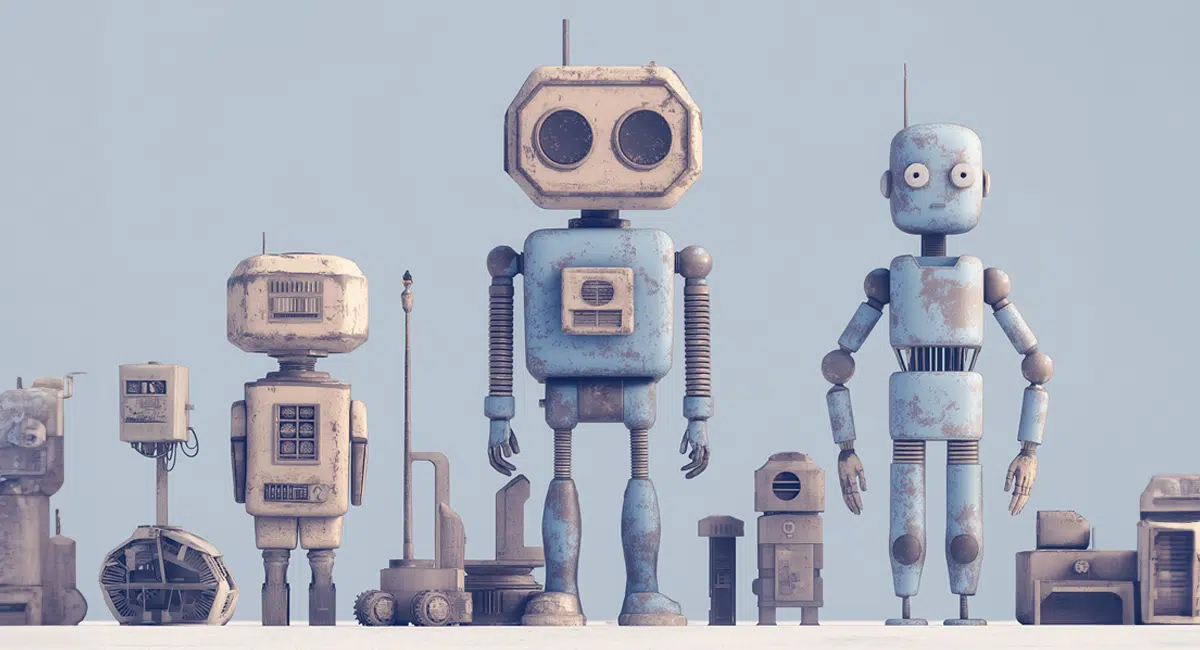
A group of vintage-style robots in various designs and sizes, showcasing different characteristics and features, set against a light blue background.

Exploring Digital Anthropology: A Day in the Life

The podcast, A Day in the Life of a Digital Anthropologist, takes listeners on a journey into the daily lives of digital anthropologists and explores what it really means to be an anthropologist in virtual spaces. Scarleth Milenka, executive director of the OREZ Anthropological Research organization, hosts the podcast with the goal of promoting the work of digital anthropologists and helping people understand what do digital anthropologists do?

Last fall, I sat down with Scarleth on A Day in the Life of a Digital Anthropologist, we discussed my work as a digital anthropologists, both in industry and in academia. I shared a bit of my unique approach to exploring online cultures and digital communities. We discussed a day in my life as a design researcher at Walmart. We dove into the challenges and rewards of being a digital anthropologist in an increasingly connected yet polarized world.

🔍 Here’s what to expect:
– How digital anthropology shapes our understanding of online communities
– My top tips for staying grounded in a fast-paced digital landscape
– A behind-the-scenes look at her research process and what keeps her motivated
– Real-world examples of how digital anthropology can impact everything from social media trends to community building
– Join us for a thought-provoking conversation that breaks down what it truly means to work in this field and why it’s more important now than ever.


Tune in now and get ready to see the digital world through a whole new lens. 🎧✨

How Anthropologists Excel in User Experience Careers

In the Anthro to UX podcast, Matt provides insights for anthropologists looking to break into user experience (UX) research through conversations with leading anthropologists working in UX. He focuses on how anthropologists have successfully made the transition, what they learned along the way, and what they would do differently. The podcast gives listeners insights into what it means to do UX research from a practical perspective and how to prepare for the career transition.

Last year, I sat down with Matt Artz for an interview on his podcast Anthro to UX and shared my UX journey. We discussed how I discovered anthropology in college and fell in love with its holistic perspective. I also talk about my role in the founding and leadership of the American Anthropological Association‘s Digital Anthropology Networking Group (DANG) and the importance of establishing the credibility of anthropologists studying digital spaces. I highlight the value of storytelling in anthropology and how the skills of anthropology translate to UX research. I also share my experience working in product management and UX research roles.

Resume

Sydney Yeager

INSIGHT · STRATEGY · INNOVATION

Innovation powered by empathic insights and data-driven decision-making.  As a digital anthropologist, I synergize qualitative and quantitative research to deliver insights into human experience that shape problem-solving and tech-led futures. I am an expert at sense-making and contextualizing diverse datasets into human-centered solutions.

WORK EXPERIENCE

Walmart Global Tech, Bentonville, AR — Senior Design Researcher

JANUARY 2023 – Present

Campus Research Portfolio: 

  • Led research strategy and planning for the global campus portfolio.
  • Stakeholder management and cross-functional alignment of Campus product, research, and design across EBS Associate Digital Experience team and the Corporate Real Estate team.
  • Collaborative leadership and mentorship of five Design Researchers for the Associate Digital Experience’s Campus research pod.
  • Strategic research to guide the new smart campus and workplace experience at Walmart’s global headquarters including projects on: Walton Family Whole Health and Fitness 30 and 120 day assessments, Mental Models for Search and Navigation, Alternative and Active Commuting, Hybrid Meetings and Collaboration Tech, Tech Bar (on-site tech support), Day in the Life of Associates.

Accessibility:

  • Stood up Accessibility User Testing research for Associate facing tech.
  • Developed intake and prioritization process for Accessibility testing funnel across the SDLC. 
  • Led Accessibility User Research on Associate Tech Platforms and Products. 

AcreTrader, Fayetteville, AR — UX Researcher

AUGUST 2022 – JANUARY 2023

  • Investment Platform – User Conversion and Investor Engagement
  • Stand Up UX Research Organization
  • Established Research Processes, Cadence, and Documentation
  • Conducted UX research end-to-end
  • Prioritized research to align with product goals and company objectives
  • Collaborated with internal stakeholders to generate UX goals
  • Self-initiated, planned and executed generative and evaluative research 
  • Built deep foundational knowledge of users and the product
  • Established continuous discovery process
  • Taught others how to apply a range of UX research methods 

Rollins College, Winter Park, FL — Visiting Assistant Professor of Anthropology and Global Health

AUGUST 2021 – JULY 2022

  • Taught mixed-methods research and supervised 170 projects

Yeager-Wright Digital Marketing, Remote — Co-Founder

MAY 2019 – PRESENT

  • Digital Transformation: marketing, community outreach, user experience, market research, and managing cross-functional team for startups, small businesses, and nonprofits

Preventice Solutions/Boston Scientific, Remote — Product Management Intern

DECEMBER 2020 – JUNE 2021

  • Software Development Life Cycle in an Agile Environment
  • Developed and Evangelized a Product Vision and Road Map
  • Workstreams: Development of New Portal, Internal Operational Changes, & Patient Engagement Channel

University of Central Arkansas, Conway, AR/Remote — Adjunct Lecturer of Anthropology, Sociology, and Honors

JANUARY 2019 – MAY 2021

  • Taught research methods and supervised 281 research projects

Hendrix College, Conway, AR — Adjunct Lecturer

AUGUST 2018 – DECEMBER 2019

  • Taught mixed-methods research and supervised 66 projects

Society for Medical Anthropology — Webmaster

NOVEMBER 2017 – FEBRUARY 2021

  • Web design, social media, digital content, tech support

PROJECTS

Accessibility & AI

2024-Present Drawing on two decades of accessibility advocacy, ethnographic research both in-person and online participant-observation in disability communities, interviews, accessibility user testing, and surveys of professionals with disabilities, I have a written a chapter, “AI-powered Accessibility: Inclusive Co-design and Disability Expertise in AI-Powered Workplace” for the edited volume Anthropology & AI in Routledge’s Anthropology of Now series to be published later this year.

AI & the Challenges of Culturally Biased Data – Lead Researcher

2021-Present Study of the impact of culturally biased AI training data and critical human rights concerns regarding the global adoption of AI and LLMs by governments, governmental agencies, corporations, and private citizens. Insights shared at 2021 UNESCO launch of Digital Anthropology Initiative at the UN, in public talks, guest lectures, and academic conferences.Neurodivergence, Identity, & Social Media – Lead Researcher

Beginning in 2021, I began observing multiple neurodivergent communities, studying their self-identification and identity curation on social media. Generative research focused on understanding neurodiverse experiences including participant observation in online communities and hashtag ethnography.

COVID Denial and Distrust in the Ozarks – Lead Researcher

In the wake of the COVID-19 pandemic, I began research on the impact of heightened distrust of government and media in the Arkansas Ozarks on public health outcomes, collecting data on digital participation in disinformation and distrust on Facebook. This work includes interviews with community members, healthcare providers in the region, and discourse analysis of social media posts, primarily on Facebook.

Mourning Practices on Facebook: Facebook Shrines and Other Rituals of Grieving in the Digital Age — Lead Researcher

Defended and published in 2021 for SMU, I conducted ethnographic research on the impact of mourning on Facebook users’ experiences. This digital health project investigated social support networks and community building in social media spaces. I conducted interviews with Facebook users, local religious leaders, mental healthcare providers, and educators. I combined the qualitative insights from my interviews with quantitative data from my online survey of Facebook users and visual and discourse analysis of Facebook posts with mourning content.

Acting in America — Research Assistant

From 2015 to 2016, I transcribed interviews, created metadata, and curated digital data for the Library of Congress’s Occupational Folklife Project.

Joseph Campbell Foundation — Research & Scientific Editor

In 2016-2017, I researched the science of dates and made edits for accuracy for the republication of The Complete Works of Joseph Campbell. I edited the works to update the content to include the most recent findings from archeology, paleoanthropology, and human biology.

Making School Consolidation a Win-Win – Consultant

In Fall 2014, I consulted with the same school district while it was planning its consolidation with the long-standing revival school district of a neighboring community. I provided insights into the community tensions and priorities, based on past generative research and participant-observation and focus group interviews during the early consolidation talks. I delivered a two-year strategy for a peaceful consolidation, which was followed with great success.

Smartphone Awareness, Absorption & Anxiety – Consultant

In March 2013, this research project focused on smartphone use in relation to anxiety and identity among teachers and students in South Arkansas. I interviewed teachers, administrators, parents, and students in addition to participant-observation in the community and school. I also surveyed teachers and admins and presented my findings to the school administration which directly shaped the introduction of their new cellphone study.

Irish Cures and Faith Healing – Lead Researcher

In 2012, I conducted generative ethnographic research in the Republic of Ireland, focused on alternative healing, ethnomedicine, and religion.

The Embodiment of Birth – Lead Researcher

In 2011, 2016, and 2017, I conducted generative research into the natural birth movements in Dallas, Austin, and San Antonio. I shadowed Doulas and Hypnobirthing Educators in their training seminars, at workshops they gave to expectant parents, and interviewed the birth educators and participants.

Good Roots: An Ethnography of Storytelling, Healing, and Family in the Ozarks – Lead Researcher

From 2007 to 2009, I conducted generative research including interviews, participant-observation, and collected genealogical data relevant to my ethnographic research on traditional healing and kinship in the Ozarks. This work was presented to the community, as guest lectures, at academic conferences, and utilized to write my honors thesis.

Conserving Arkansas Agricultural Heritage – Research Assistant

From 2008 to 2009, I managed event planning and logistics for the first annual Seed Swap. I interviewed participants, collected samples of heirloom seeds, and organized data collected for the CAAH’s Seed Bank, establishing protocols for data collection and training other research assistants. 

High School Technology Buildings – Architectural Design and Research Consultant

2002 As EAST Lab design and research consultant, I conducted interviews, surveys, and competitor analysis  to identify requirements for the new technology center and implemented the recruitments into architectural designs for two educational smart buildings that were completed in 2007.

Two Story Home for a Family of Five– Architectural Design and Research Consultant

2001 Research and designed to order architectural blueprint for a 3,490 square foot, 4 bedrooms, 3.5 bath family home that was completed in 2002 in Arkansas.

SKILLS

Digital Anthropology

  • Empathy
  • Ethnography
  • Thick Data
  • Ethics
  • Teaching

Research

  • Generative Research
  • Market Research
  • Research Design
  • Human-Centered Research
  • Digital Methods
  • Mixed-Methods
  • Interviews
  • Focus Groups
  • Online Surveys
  • Decision Modeling
  • IRB & Research Ethics
  • Research Management
    Data Analysis

Business

  • Digital Innovation
  • Branding Strategy
  • Go to Market Strategy
  • Digital Marketing
  • Product Management
  • Financial Modeling
  • Concept Evaluation
  • Prioritization
  • Business Analysis
  • Membership Recruitment
  • Networking

Design

  • Web Design
  • Course Design
    Process Design
  • Ideation

Communication

  • Public Speaking
  • Presentations
  • Writing
  • Content Editing
  • Data Visualization
  • Social Media
  • UX Writing


 DELIVERABLES

  • Research Proposal & Roadmap
  • Insight Report
  • Presentation / Slide Deck / Video
  • Personas / Archetype
  • Use Cases & User Needs
  • Decision Tree
  • Engagement Data Analytics
  • Mockups and Wireframing
  • User Journey Map
  • Mapping Pain Points
  • Swimlane
  • Workflow
  • High Level Data Flow
  • Financial Model / ROI Forecast
  • Product Vision & Roadmap
  • KPIs & Evaluation Criteria
  • Conversational AI Scripts
  • Websites

EDUCATION

Southern Methodist University
Ph.D., Cultural Anthropology
MA, Cultural Anthropology

University of Central Arkansas
Bachelor of Science in History

AFFILIATIONS

Digital Anthropology Interest Group (DANG)
Co-Founder 2012-Present
Chair 2015-Present
Social Media 2012-2015

UNESCO & LiiV Research Center: Digital Innovation in Anthropology Initiative Collaborator 2021 – Present

American Anthropological Association (AAA)

Member 2011 – Present

National Association for the Practice of Anthropology (NAPA) Member 2021 – Present

EPIC Member 2022 – Present

Society of Medical Anthropology (SMA) Exo Board Member, Webmaster, Communications Committee, 2017-2021

Society of Anthropology of Consciousness
Exec. Board & Communications Chair 2013-2021
Program Chair 2016-2018

Fulbright: Afghanistan Fall Enrichment Seminar Program Ambassador 2016 & 2017

Happy Halloween!


ducks dress up

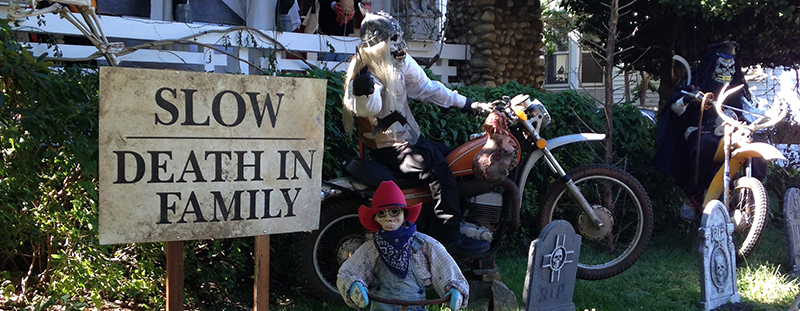
Halloween is such a fascinating holiday to consider from a cultural perspective. During Halloween season we revel in breaking taboos and dancing with danger. We celebrate life by mocking death. We look our fears in the face and find a way to laugh. While we spend the rest of the year doing our best to avoid the topic of death, on Halloween we look it in the face and say not today.

The liminality of the holiday lends itself to liberation of appearance and identity, two things Americans take very seriously the rest of the year. Halloween is a day to dress up literally anyway you want. Children dress up for candy. Adolescents dress up for a night of pranks and mayhem. But why do adults dress up?

So your friendly neighborhood anthropologist wants to know:

What are you dressing up as for Halloween? Why? (Please Post Pics in the Comments)

In hopes of digging a little bit deeper, I’m asking this question to people on through my social media accounts. Look for an update over the weekend.

ghosts

How to Develop Sherlock Holmes-Like Powers of Observation and Deduction

This is an amazing little article about Observation and Deduction. I’d recommend anyone considering going into anthropology to give it a read. It’s also a great little refresher on the power of observation packed with helpful reminders and links to tools for improving your skills for any anthropologist in the field.

http://lifehacker.com/5960811/how-to-develop-sherlock-holmes-like-powers-of-observation-and-deduction

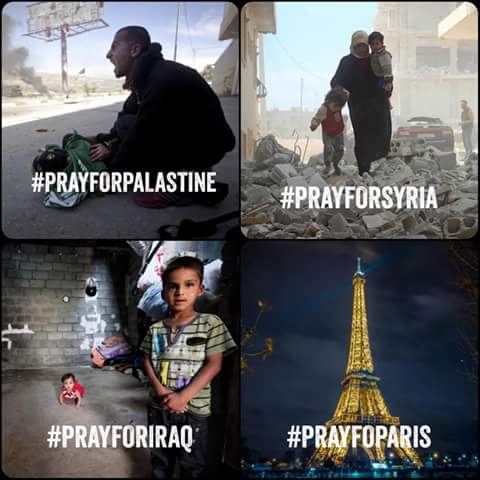
Let Your Let Shine #UnitedWeStand #PrayfortheWorld

Let your light shine in the face of terror, hatred, and evil. Only if we stand united in love, will our inner light be able to banish this great darkness from the world. Not just the “Western world,” but the entire planet. Violence, suffering, and hate spread like a sickness throughout of planet.

Solidarity in the Face of Terror- Let Your Light Shine

We must stand in solidarity not just with France, but with all those who have been attacked. Terrorism is bred of hatred. Violence begets violence. It longs to cast its darkness upon the world. It is the evil not of one religion or race or nation, but of those who love violence and cling to their blind hatred above all else. It murders and violates the innocent. It drives families from their homes. If allowed, it will poison humanity, brother against brother. Standing in solidarity with one another, we can lend each other strength to brave this darkness together.

Seeing places like Paris or New York or London hit by terrorism provokes more attention because we have grown painfully numb to daily battles faced by the innocent citizens of the Middle East. But we have to realize that an attack on humanity anywhere is an attack on us all. How can we claim inalienable rights, given to us by God, if we allow those human rights to be continuously violated?Pray for

Terrorism wants to strip away our sense of home. Home. What does that word mean? Yes, it is a space you live in, but it is so much more. It is our shelter, our security. It is a place we share with our family. The place we invite our friends. Stealing a person’s home, forcing them out with violence and fear. It takes away the person’s sense of security and disrupts their family. It violates the sacred space meant to shelter you from the outside world. In the end, this leaves in those still in their own homes in a state of fear.

Pray for the World

#PrayfortheWorld

These deaths, this violence, and chaos do not honor God, Allah, or Yahweh. The God who brought order into the universe in the act of creation, who gave law to his people, who taught love and forgiveness. No the only god honored by terrorism is the god of darkness, bloodlust, and chaos who sows evil into the heart of men. Intoxicated with power, blinded by hatred, people have been led astray feeling justified in their self-righteousness. But in the end their lives are claimed by this violence too.

Good people with good hearts, we need to stand together. We are stronger united. Standing against violence and injustice. Terrorism violates rights to life, liberty, and home. It extinguishes all hopes of happiness, replacing them with fears. Global solidarity standing together against terrorism isn’t the perfect solution for ending acts of violence and hatred around the world, but it is the answer to defeating terrorism.

Terrorist win when we are living in terror. Feeling cut off, alone, in constant danger. While changing your Facebook status or my making social media post may seem futile, these are powerful symbolic tools amplifying our voice. We can share love and respect, standing together in solidarity against this violence and hatred strengthens all of us. We fight the darkness by letting our light shine. Together we can light the world.

we are all in this together

What Halloween Masks

A very thoughtful consideration of Halloween from the eyes of little children. Perhaps because I have spent the past two days at grief workshops, this article made me wonder if forcing little children to confront death and danger while playing at adult roles and power serves a greater function or at least has the opportunity to. The power inversion of being “grown up” for a day and the freedom of taboo and prohibition breaking is empowering, perhaps, empowering enough to help prepare youngesters to face the danger and death they are forced to confront. Does confront death and danger in this controlled fashion (it may not seem controlled to the kid but it definitely is) help prepare them for facing death and danger the rest of the year? It would definitely be interesting to study why children choose to dress up as whoever or whatever. I think there is are a lot of ethnopsychology questions that could be asked in this arena as well.